<?xml version="1.0" encoding="utf-8"?>
<feed xmlns="http://www.w3.org/2005/Atom">
	<title type="html"><![CDATA[ChipMusic.org - Breaking a Circuit Path]]></title>
	<link rel="self" href="https://chipmusic.org:80/forums/feed/atom/topic/14470/"/>
	<updated>2014-06-05T23:21:26Z</updated>
	<generator>PunBB</generator>
	<id>https://chipmusic.org/forums/topic/14470/breaking-a-circuit-path/</id>
		<entry>
			<title type="html"><![CDATA[Re: Breaking a Circuit Path]]></title>
			<link rel="alternate" href="https://chipmusic.org/forums/post/210252/#p210252"/>
			<content type="html"><![CDATA[<p>Thank you all! I feel ready to give it a try now,</p><p>Stuart</p>]]></content>
			<author>
				<name><![CDATA[looperboy]]></name>
				<uri>https://chipmusic.org/looperboy</uri>
			</author>
			<updated>2014-06-05T23:21:26Z</updated>
			<id>https://chipmusic.org/forums/post/210252/#p210252</id>
		</entry>
		<entry>
			<title type="html"><![CDATA[Re: Breaking a Circuit Path]]></title>
			<link rel="alternate" href="https://chipmusic.org/forums/post/210214/#p210214"/>
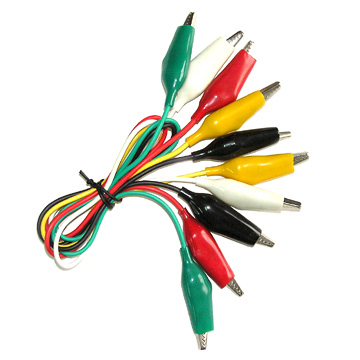
			<content type="html"><![CDATA[<p>What kind of project are you working on?</p><p>The quick and dirty way to break a signal path on a circuit board is to scatch at the trace with a screwdriver or any other sharp metal object that happens to be handy.</p><p>If your new to circuit bending the first thing that I would recommend you do is buy some of these -<br /><a class="postimg" href="http://www.asia.ru/images/target/photo/51185330/Alligator_Clip.jpg" title="http://www.asia.ru/images/target/photo/51185330/Alligator_Clip.jpg" id="forum_image_36380620"><img src="http://www.asia.ru/images/target/photo/51185330/Alligator_Clip.jpg" /></a></p><p>Learn a little about soldering/desoldering, potentiometers, switches, and of course safety.</p><p>Then take a few of your alligator clips and cut them up then re-solder them back together with a potentiometer and/or a switch on there. Or use a breadboard + potentiometers/switches + 2 wires with alligator clips on one end of them to do something similar without all the soldering. Once you do this you can really dive into circuit bending pretty easily.</p><p>The thing I probably use most when circuit bending is a breadboard with an wire+clip as an input + a momentary switch + a potentiometer(or a few different potentiometers of different strength) then another wire+clip as an output just to test things out. Another thing I use alot is an alligator clip attached to a bare wire that I wrap around my finger or something else that is grounded to test out what happens when I ground specific places on a circuit board out.</p><p>I hope you understand what I&#039;m trying to say.</p><p>And wear eye protection even if you think that you don&#039;t need it.</p>]]></content>
			<author>
				<name><![CDATA[SurfaceDragon]]></name>
				<uri>https://chipmusic.org/SurfaceDragon</uri>
			</author>
			<updated>2014-06-05T07:37:53Z</updated>
			<id>https://chipmusic.org/forums/post/210214/#p210214</id>
		</entry>
		<entry>
			<title type="html"><![CDATA[Re: Breaking a Circuit Path]]></title>
			<link rel="alternate" href="https://chipmusic.org/forums/post/210211/#p210211"/>
			<content type="html"><![CDATA[<div class="quotebox"><cite>Adil Soubki wrote:</cite><blockquote><p>Score it with an exact-o knife just be careful.</p></blockquote></div><br /><p>this.&nbsp; a dremel also works wonders.</p>]]></content>
			<author>
				<name><![CDATA[kitsch]]></name>
				<uri>https://chipmusic.org/kitsch</uri>
			</author>
			<updated>2014-06-05T06:24:10Z</updated>
			<id>https://chipmusic.org/forums/post/210211/#p210211</id>
		</entry>
		<entry>
			<title type="html"><![CDATA[Re: Breaking a Circuit Path]]></title>
			<link rel="alternate" href="https://chipmusic.org/forums/post/210210/#p210210"/>
			<content type="html"><![CDATA[<p>Score it with an exact-o knife just be careful.</p>]]></content>
			<author>
				<name><![CDATA[Adil Soubki]]></name>
				<uri>https://chipmusic.org/Adil+Soubki</uri>
			</author>
			<updated>2014-06-05T06:18:52Z</updated>
			<id>https://chipmusic.org/forums/post/210210/#p210210</id>
		</entry>
		<entry>
			<title type="html"><![CDATA[Re: Breaking a Circuit Path]]></title>
			<link rel="alternate" href="https://chipmusic.org/forums/post/210181/#p210181"/>
			<content type="html"><![CDATA[<p>Dont do it you will explde seriisuly</p>]]></content>
			<author>
				<name><![CDATA[Dadibom]]></name>
				<uri>https://chipmusic.org/Dadibom</uri>
			</author>
			<updated>2014-06-05T00:03:15Z</updated>
			<id>https://chipmusic.org/forums/post/210181/#p210181</id>
		</entry>
		<entry>
			<title type="html"><![CDATA[Re: Breaking a Circuit Path]]></title>
			<link rel="alternate" href="https://chipmusic.org/forums/post/210180/#p210180"/>
			<content type="html"><![CDATA[<p>Probably just cut the trace, no?</p>]]></content>
			<author>
				<name><![CDATA[stargazer]]></name>
				<uri>https://chipmusic.org/stargazer</uri>
			</author>
			<updated>2014-06-04T23:47:48Z</updated>
			<id>https://chipmusic.org/forums/post/210180/#p210180</id>
		</entry>
		<entry>
			<title type="html"><![CDATA[Breaking a Circuit Path]]></title>
			<link rel="alternate" href="https://chipmusic.org/forums/post/210179/#p210179"/>
			<content type="html"><![CDATA[<p>Hi,</p><p>What is the best way to break a signal path on a pcb? It&#039;s something I haven&#039;t done before- do you score the board, or remove a component etc?</p><p>Thanks</p><p>Stuart</p>]]></content>
			<author>
				<name><![CDATA[looperboy]]></name>
				<uri>https://chipmusic.org/looperboy</uri>
			</author>
			<updated>2014-06-04T23:20:08Z</updated>
			<id>https://chipmusic.org/forums/post/210179/#p210179</id>
		</entry>
</feed>
