<?xml version="1.0" encoding="utf-8"?>
<feed xmlns="http://www.w3.org/2005/Atom">
	<title type="html"><![CDATA[ChipMusic.org - Calling all PCB designers: What design rules do you use?]]></title>
	<link rel="self" href="https://chipmusic.org:80/forums/feed/atom/topic/16337/"/>
	<updated>2017-03-27T06:19:29Z</updated>
	<generator>PunBB</generator>
	<id>https://chipmusic.org/forums/topic/16337/calling-all-pcb-designers-what-design-rules-do-you-use/</id>
		<entry>
			<title type="html"><![CDATA[Re: Calling all PCB designers: What design rules do you use?]]></title>
			<link rel="alternate" href="https://chipmusic.org/forums/post/251845/#p251845"/>
			<content type="html"><![CDATA[<p>I have used Seeed Studio twice for qty 20 pieces of two small <a href="https://www.seeedstudio.com/fusion_pcb.html" target="_blank">pcb fabrication</a>. They provided very good boards. The only thing that wasn&#039;t perfect was their factory is located in China and i&#039;m in uk that it would take a few more days to ship than uk pcb manufacturer.</p>]]></content>
			<author>
				<name><![CDATA[vigilante]]></name>
				<uri>https://chipmusic.org/vigilante</uri>
			</author>
			<updated>2017-03-27T06:19:29Z</updated>
			<id>https://chipmusic.org/forums/post/251845/#p251845</id>
		</entry>
		<entry>
			<title type="html"><![CDATA[Re: Calling all PCB designers: What design rules do you use?]]></title>
			<link rel="alternate" href="https://chipmusic.org/forums/post/228174/#p228174"/>
			<content type="html"><![CDATA[<div class="quotebox"><cite>bit 9 wrote:</cite><blockquote><p>Thanks for the input thus far, folks. Who aside from OSH Park should I consider for small pilot runs?</p></blockquote></div><p>Try the site <a href="http://pcbshopper.com/" target="_blank">http://pcbshopper.com/</a><br />Generally, for very small boards, and small runs, a reasonable quality requirement, and and a reasonable shipping, oshpark is the way to go. If you want slightly bigger boards or a bigger run etc, it might be worth looking at the other manufacturers. Also do you research and look for reviews of the manufacturers in case some of them are bad apples.</p>]]></content>
			<author>
				<name><![CDATA[nitro2k01]]></name>
				<uri>https://chipmusic.org/nitro2k01</uri>
			</author>
			<updated>2015-04-03T10:45:58Z</updated>
			<id>https://chipmusic.org/forums/post/228174/#p228174</id>
		</entry>
		<entry>
			<title type="html"><![CDATA[Re: Calling all PCB designers: What design rules do you use?]]></title>
			<link rel="alternate" href="https://chipmusic.org/forums/post/228144/#p228144"/>
			<content type="html"><![CDATA[<p>Flux in the form of pens, pastes or liquids all depend on the flux type used. Where I work, I have found halide based fluxes more than 20 years old still work far better than modern equivalents. They are very corrosive and require thorough cleaning to prevent rapid deterioration of PCB &amp; components. I&#039;m unsure if these are still available, and require ventilation when in use.</p><p>I find in general, RMA fluxes give best results with hot air soldering as a certain amount of time needs to elapse while the flux is in its &#039;activated&#039; temperature range. The slow temperature/time ramp hot air provides is ideal.</p><p>Organic based fluxes typically work at room temperatures so they are both effective and require cleaning (a lot are alcohol based and de-min water can be used to post-clean. A lot cheaper and safer than Iso)</p><p>Another thing to consider is the source of your components. If your IC&#039;s for example have been stored for years without desiccants, oxides will form on the pins requiring a more aggressive flux to get a reliable solder joint. You&#039;ll know when you get a bad batch of IC&#039;s as they don&#039;t wet as easily as they should when soldering.</p><p>All fluxes have a shelf life, and should be stored in a refrigerator. I personally don&#039;t bother as I&#039;ll use a 50ml bottle in a few months.</p><p>Flux cored solder is just about the standard these days. They are said to have a shelf life too, though I have a 10yr old 1kg roll that I use day to day and can&#039;t say it works any better/worse than a roll a few months old. One thing I would recommend on an old roll of solder is to give it a wipe over to remove the lead oxide that forms on it. It doesn&#039;t effect the soldered joint but dirties your tip a lot quicker.</p>]]></content>
			<author>
				<name><![CDATA[BennVenn]]></name>
				<uri>https://chipmusic.org/BennVenn</uri>
			</author>
			<updated>2015-04-03T03:28:29Z</updated>
			<id>https://chipmusic.org/forums/post/228144/#p228144</id>
		</entry>
		<entry>
			<title type="html"><![CDATA[Re: Calling all PCB designers: What design rules do you use?]]></title>
			<link rel="alternate" href="https://chipmusic.org/forums/post/228137/#p228137"/>
			<content type="html"><![CDATA[<p>@BennVenn:<br />Thanks for the info. What are your thoughts on flux pens and fluxed solder?</p><p>@nitro:<br />Unfortunately I destroyed some traces on the backside I used a saw to coax it off it&#039;s perfboard. That board of yours would have been very useful, indeed. As for the microcontroller - I&#039;m going to solder the ATMEGA32U4s to the board directly. Teensy is closed-source, so I can&#039;t flash it myself. Luckily, they can be bought separate from the 2.0 boards. The 2.0 development board can&#039;t really be put onto the DMG if you want the USB to line up with the link-port&#039;s opening, because the pins interfere with the screen&#039;s flex cable&#039;s connector.</p><p>Thanks for the input thus far, folks. Who aside from OSH Park should I consider for small pilot runs?</p>]]></content>
			<author>
				<name><![CDATA[bit 9]]></name>
				<uri>https://chipmusic.org/bit+9</uri>
			</author>
			<updated>2015-04-03T03:02:41Z</updated>
			<id>https://chipmusic.org/forums/post/228137/#p228137</id>
		</entry>
		<entry>
			<title type="html"><![CDATA[Re: Calling all PCB designers: What design rules do you use?]]></title>
			<link rel="alternate" href="https://chipmusic.org/forums/post/228130/#p228130"/>
			<content type="html"><![CDATA[<p>I&#039;ll read your whole post when I get off of work, but for I can just say one thing. Read the rules set by your fab house and stick to those. They will have very specific rules readily available to you.</p>]]></content>
			<author>
				<name><![CDATA[Jazzmarazz]]></name>
				<uri>https://chipmusic.org/Jazzmarazz</uri>
			</author>
			<updated>2015-04-03T01:45:22Z</updated>
			<id>https://chipmusic.org/forums/post/228130/#p228130</id>
		</entry>
		<entry>
			<title type="html"><![CDATA[Re: Calling all PCB designers: What design rules do you use?]]></title>
			<link rel="alternate" href="https://chipmusic.org/forums/post/228129/#p228129"/>
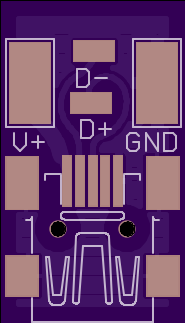
			<content type="html"><![CDATA[<div class="quotebox"><cite>bit 9 wrote:</cite><blockquote><p>The Teensy in the photo is one I&#039;ve absolutely destroyed because the one I&#039;m going to use needs to be salvaged from another build.</p></blockquote></div><p>Call me crazy, but I think that Teensy is totally salvageable, if all you destroyed is the USB jack. Given thin wire single strand wire, a good iron, and some flux, and of course patience, you should be able to connect single strand wires to the resistors. That&#039;s your D+ and D- pins. If you want to live on the wild side, (or you messed up) you can even get rid of the resistors and connect the wires directly. This will violate USB spec, and offer slightly less protection of your chip and USB port, but will usually work. Ground and Vcc should be far easier to hook up, but you need to find the right place to connect +5V, in case Vcc on that board is actually the regulated 3.3V.</p><p><a class="postimg" href="https://644db4de3505c40a0444-327723bce298e3ff5813fb42baeefbaa.ssl.cf1.rackcdn.com/uploads/project/top_image/FsmEGCFm/i.png" title="https://644db4de3505c40a0444-327723bce298e3ff5813fb42baeefbaa.ssl.cf1.rackcdn.com/uploads/project/top_image/FsmEGCFm/i.png" id="forum_image_88030949"><img src="https://644db4de3505c40a0444-327723bce298e3ff5813fb42baeefbaa.ssl.cf1.rackcdn.com/uploads/project/top_image/FsmEGCFm/i.png" /></a>But that&#039;s only one side of the story (and conneciton). I designed these little simple minimal USB port adapter for random uses, which would be suitable here. Just glue this board down over the missing USB port and jump the wires over from board to board.</p><p>I may also have some comments about the project in general. If you&#039;re going to do this seriously, you may consider making your own board for the microcontroller, at least if you can have them assembled with a pick and place machine by the board house. That would give you more freedom to fit more stuff in less space in total than using a premade Teensy unit. SMD size: Like Benn said, if you&#039;re going to solder by hand, use 1206 resistors, though I think most people can get used to 0805 rather easily too. And to again echo what people have said, the board house will typically provide you with specifications and DRC rules. Nevertheless, stay a bit above the minimum width to avoid problems.</p>]]></content>
			<author>
				<name><![CDATA[nitro2k01]]></name>
				<uri>https://chipmusic.org/nitro2k01</uri>
			</author>
			<updated>2015-04-03T01:41:59Z</updated>
			<id>https://chipmusic.org/forums/post/228129/#p228129</id>
		</entry>
		<entry>
			<title type="html"><![CDATA[Re: Calling all PCB designers: What design rules do you use?]]></title>
			<link rel="alternate" href="https://chipmusic.org/forums/post/228127/#p228127"/>
			<content type="html"><![CDATA[<p>bit 9,</p><p>If you are hand assembling I&#039;d go with 1206, if you are outsourcing, go with whatever is cheapest. Smaller than 1206 can be done with a fine tip iron / hot air though why make things harder than they need to be? (unless you need very high density)</p><p>And as Apeshit says, go with your design houses&#039; design rules and maybe increase track width just a touch to be safe. If you find a fault in your PCB, it&#039;s a lot easier to jumper when you&#039;re dealing with reasonable track widths.</p><p>Oh, and if you are going to be soldering fine pitch SMD IC&#039;s, get yourself some quality flux (not necessarily rosin based). It may require extra cleaning when you&#039;re done, but there is nothing worse than a dry joint on a 128pin IC. The difference between 2yr old chinese flux and in-date RS flux is amazing.</p>]]></content>
			<author>
				<name><![CDATA[BennVenn]]></name>
				<uri>https://chipmusic.org/BennVenn</uri>
			</author>
			<updated>2015-04-03T01:25:48Z</updated>
			<id>https://chipmusic.org/forums/post/228127/#p228127</id>
		</entry>
		<entry>
			<title type="html"><![CDATA[Re: Calling all PCB designers: What design rules do you use?]]></title>
			<link rel="alternate" href="https://chipmusic.org/forums/post/228126/#p228126"/>
			<content type="html"><![CDATA[<p>@Apeshit:<br />What size SMDs do you use, and who prints your boards?</p>]]></content>
			<author>
				<name><![CDATA[bit 9]]></name>
				<uri>https://chipmusic.org/bit+9</uri>
			</author>
			<updated>2015-04-03T00:37:03Z</updated>
			<id>https://chipmusic.org/forums/post/228126/#p228126</id>
		</entry>
		<entry>
			<title type="html"><![CDATA[Re: Calling all PCB designers: What design rules do you use?]]></title>
			<link rel="alternate" href="https://chipmusic.org/forums/post/228125/#p228125"/>
			<content type="html"><![CDATA[<div class="quotebox"><cite>bit 9 wrote:</cite><blockquote><p>That is, in fact, something I&#039;ve considered. I see we are like mind. Giving the Teensy access to those traces would allow for that if the code was modified appropriately. This is the type of thing I was thinking with the &quot;Adding jumpers to give the Teensy access to the A/B/D-pad/Start/Select buttons for serial control&quot; point. If this is the type of thing you think people would use (I&#039;m not actually much into the production of the music, more the tinkering of the hardware), I&#039;ll be more inclined to do it. I welcome any practitioner&#039;s insights.</p></blockquote></div><p>for me it would be very handy with littlegptracker midi because i have lsdj be a clock slave, and run everything from the other devices interface. Not sure if there is a call for other people to use it though.</p><p>I</p>]]></content>
			<author>
				<name><![CDATA[herr_prof]]></name>
				<uri>https://chipmusic.org/herr_prof</uri>
			</author>
			<updated>2015-04-03T00:34:39Z</updated>
			<id>https://chipmusic.org/forums/post/228125/#p228125</id>
		</entry>
		<entry>
			<title type="html"><![CDATA[Re: Calling all PCB designers: What design rules do you use?]]></title>
			<link rel="alternate" href="https://chipmusic.org/forums/post/228124/#p228124"/>
			<content type="html"><![CDATA[<p>.</p>]]></content>
			<author>
				<name><![CDATA[Apeshit]]></name>
				<uri>https://chipmusic.org/Apeshit</uri>
			</author>
			<updated>2015-04-03T00:24:06Z</updated>
			<id>https://chipmusic.org/forums/post/228124/#p228124</id>
		</entry>
		<entry>
			<title type="html"><![CDATA[Re: Calling all PCB designers: What design rules do you use?]]></title>
			<link rel="alternate" href="https://chipmusic.org/forums/post/228123/#p228123"/>
			<content type="html"><![CDATA[<div class="quotebox"><cite>herr_prof wrote:</cite><blockquote><p>cant help with pcb, just want to whisper into your ear a suggestion for midi control of gameboy buttons..... so a sequencer can say send notes that would tell lsdj to load a song.</p></blockquote></div><p>That is, in fact, something I&#039;ve considered. I see we are like mind. Giving the Teensy access to those traces would allow for that if the code was modified appropriately. This is the type of thing I was thinking with the &quot;Adding jumpers to give the Teensy access to the A/B/D-pad/Start/Select buttons for serial control&quot; point. If this is the type of thing you think people would use (I&#039;m not actually much into the production of the music, more the tinkering of the hardware), I&#039;ll be more inclined to do it. I welcome any practitioner&#039;s insights.</p>]]></content>
			<author>
				<name><![CDATA[bit 9]]></name>
				<uri>https://chipmusic.org/bit+9</uri>
			</author>
			<updated>2015-04-03T00:19:47Z</updated>
			<id>https://chipmusic.org/forums/post/228123/#p228123</id>
		</entry>
		<entry>
			<title type="html"><![CDATA[Re: Calling all PCB designers: What design rules do you use?]]></title>
			<link rel="alternate" href="https://chipmusic.org/forums/post/228122/#p228122"/>
			<content type="html"><![CDATA[<p>cant help with pcb, just want to whisper into your ear a suggestion for midi control of gameboy buttons..... so a sequencer can say send notes that would tell lsdj to load a song.</p>]]></content>
			<author>
				<name><![CDATA[herr_prof]]></name>
				<uri>https://chipmusic.org/herr_prof</uri>
			</author>
			<updated>2015-04-03T00:09:41Z</updated>
			<id>https://chipmusic.org/forums/post/228122/#p228122</id>
		</entry>
		<entry>
			<title type="html"><![CDATA[Calling all PCB designers: What design rules do you use?]]></title>
			<link rel="alternate" href="https://chipmusic.org/forums/post/228121/#p228121"/>
			<content type="html"><![CDATA[<p>tl;dr:<br />This is something of an open letter to those who offered me their help, and others with experience in PCB fabrication. What trace width, spacing, SMD/via/pad/through-hole/etc. size do you use/recommend? Having never sent anything to a board shop, what should I know?</p><p>That is all.</p><div class="spoilerbox" id="spoiler8752642"><h3 onclick="$('#spoilerbox8752642').css('display','block');$('#spoiler8752642').css('display','none')">&#8250; Why I ask</h3></div><div class="spoilerbox" id="spoilerbox8752642" style="display:none"><h3 onclick="$('#spoilerbox8752642').css('display','none');$('#spoiler8752642').css('display','block')">&#8249; Why I ask</h3><p>Hay folks,<br />All may rejoice for I am unemployed and can once again invest unhealthy quantities of time and energy into the various projects that I never seem to bring to completion. (<a href="http://chipmusic.org/forums/topic/13608/" target="_blank">previous thread</a> from a year ago)</p><p>I have a pretty clear plan for what DMG++ will have, at least in the first run of it (don&#039;t get too-too wound up just yet, it&#039;ll be a ways out/not a formal announcement).<br />What I&#039;m pretty-much decided on so far:<br /></p><ul><li><p>First and foremost: on-board Teensy 2.0 &gt; Teensyduino &gt; Arduinoboy</p></li><li><p>All Teensy pins accessible for further modding</p></li><li><p>Fit within the standard DMG case and plug into the standard screen PCB</p></li><li><p>USB-B jack located where the link-port would have been</p></li><li><p>Run off USB power</p></li><li><p>Rechargeable battery</p></li><li><p>Better audio isolation (the sound chip is part of the CPU&#039;s IC, so you can only do so much)</p></li><li><p>Pro-sound straight out from the CPU</p></li><li><p>Better power regulation (currently looking into what that actually means)</p></li><li><p>SMD components to make space for future on-board mods</p></li><li><p>More aesthetically pleasing board (no questions, please)</p></li></ul><br /><p>And some things I&#039;m considering:<br /></p><ul><li><p>Headphone amp, perhaps <a href="http://tangentsoft.net/audio/cmoy/" target="_blank">like this</a></p></li><li><p>Re-writing the Arduinoboy in C (though the benefit in doing this is pretty minimal)</p></li><li><p>Feeding the audio to analogue pins for modding purposes (using jumpers)</p></li><li><p>Clock mod (potentially controlled by MIDI by adding to the Arduino code)</p></li><li><p>1/4&quot; audio jack attachment point</p></li><li><p>Adding jumpers to give the Teensy access to the A/B/D-pad/Start/Select buttons for serial control</p></li><li><p>A few other things I&#039;m not remembering right now</p></li></ul></div><p>should be it&#039;s own thread - but I&#039;m not doing that</p><div class="spoilerbox" id="spoiler6642917"><h3 onclick="$('#spoilerbox6642917').css('display','block');$('#spoiler6642917').css('display','none')">&#8250; In related news...</h3></div><div class="spoilerbox" id="spoilerbox6642917" style="display:none"><h3 onclick="$('#spoilerbox6642917').css('display','none');$('#spoiler6642917').css('display','block')">&#8249; In related news...</h3><p>Some pictures:<br /><a class="postimg" href="http://i.imgur.com/4PsovsP.jpg" title="http://i.imgur.com/4PsovsP.jpg" id="forum_image_78499876"><img src="http://i.imgur.com/4PsovsP.jpg" /></a>Here we have an etch of a one-sided Teensyboy shield I&#039;m trying out. This one&#039;s in 2oz copper, and extends only one row below the Teensy. The Teensy in the photo is one I&#039;ve absolutely destroyed because the one I&#039;m going to use needs to be salvaged from another build.</p><p><a class="postimg" href="http://i.imgur.com/POqSmh6.jpg" title="http://i.imgur.com/POqSmh6.jpg" id="forum_image_44629673"><img src="http://i.imgur.com/POqSmh6.jpg" /></a>Here I&#039;ve scanned to-scale transparencies in-front of my barren DMG board. If you take into account I lined up the board without being able to see the transparency, it&#039;s pretty much a perfect match. The one exception really is the diodes&#039; spacing next to the link-ports, no biggie.</p><p>The significant thing this gives me is empirical evidence that I got the circuit right, which is nice.</p></div>]]></content>
			<author>
				<name><![CDATA[bit 9]]></name>
				<uri>https://chipmusic.org/bit+9</uri>
			</author>
			<updated>2015-04-03T00:06:40Z</updated>
			<id>https://chipmusic.org/forums/post/228121/#p228121</id>
		</entry>
</feed>