<?xml version="1.0" encoding="utf-8"?>
<feed xmlns="http://www.w3.org/2005/Atom">
	<title type="html"><![CDATA[ChipMusic.org - Soundactive LEDs on a DMG]]></title>
	<link rel="self" href="https://chipmusic.org:80/forums/feed/atom/topic/17246/"/>
	<updated>2015-10-30T15:35:30Z</updated>
	<generator>PunBB</generator>
	<id>https://chipmusic.org/forums/topic/17246/soundactive-leds-on-a-dmg/</id>
		<entry>
			<title type="html"><![CDATA[Re: Soundactive LEDs on a DMG]]></title>
			<link rel="alternate" href="https://chipmusic.org/forums/post/235925/#p235925"/>
			<content type="html"><![CDATA[<div class="quotebox"><cite>Jazzmarazz wrote:</cite><blockquote><p>I&#039;m not really doing gameboys anymore. But I will work on a schematic when I get a chance. I&#039;ll make it work with the 2n3904 transistor or a dual op amp with a trimmer so people can set their own brightness preferences.</p><p>The only problem is that I don&#039;t know the full range of the output, so the trimmer will fix that.</p></blockquote></div><p>That would be awesome. As I mentioned i can do solder this to that things <img src="https://chipmusic.org/forums/img/smilies/smile.png" width="15" height="15" alt="smile" /></p>]]></content>
			<author>
				<name><![CDATA[SpudBencer]]></name>
				<uri>https://chipmusic.org/SpudBencer</uri>
			</author>
			<updated>2015-10-30T15:35:30Z</updated>
			<id>https://chipmusic.org/forums/post/235925/#p235925</id>
		</entry>
		<entry>
			<title type="html"><![CDATA[Re: Soundactive LEDs on a DMG]]></title>
			<link rel="alternate" href="https://chipmusic.org/forums/post/235900/#p235900"/>
			<content type="html"><![CDATA[<p>I still regard transistors as unnatural abominations and transistor biasing as an dark form of witchcraft.</p>]]></content>
			<author>
				<name><![CDATA[Dire Hit]]></name>
				<uri>https://chipmusic.org/Dire+Hit</uri>
			</author>
			<updated>2015-10-30T06:51:54Z</updated>
			<id>https://chipmusic.org/forums/post/235900/#p235900</id>
		</entry>
		<entry>
			<title type="html"><![CDATA[Re: Soundactive LEDs on a DMG]]></title>
			<link rel="alternate" href="https://chipmusic.org/forums/post/235894/#p235894"/>
			<content type="html"><![CDATA[<p>&quot;a transistor is a series of tubes&quot;</p>]]></content>
			<author>
				<name><![CDATA[catskull]]></name>
				<uri>https://chipmusic.org/catskull</uri>
			</author>
			<updated>2015-10-30T01:07:11Z</updated>
			<id>https://chipmusic.org/forums/post/235894/#p235894</id>
		</entry>
		<entry>
			<title type="html"><![CDATA[Re: Soundactive LEDs on a DMG]]></title>
			<link rel="alternate" href="https://chipmusic.org/forums/post/235893/#p235893"/>
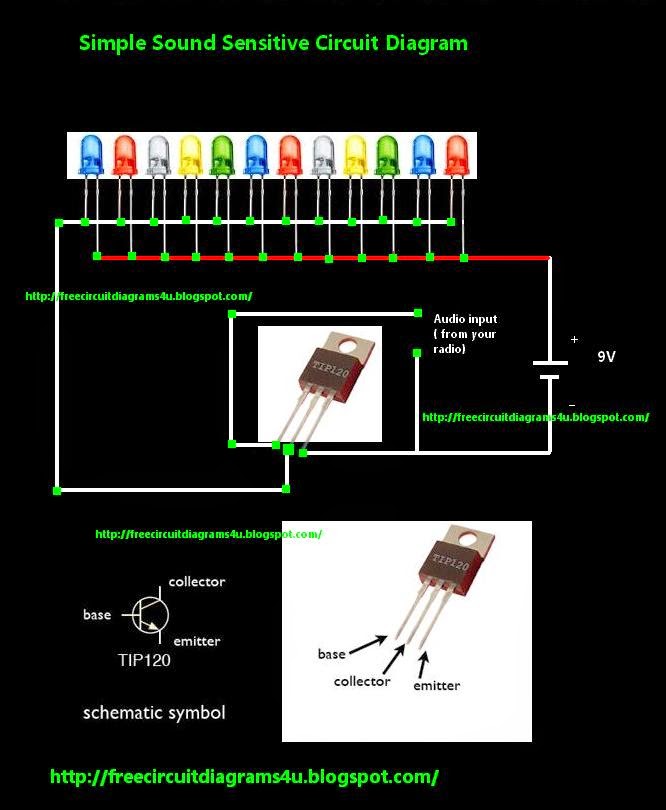
			<content type="html"><![CDATA[<div class="quotebox"><cite>jefftheworld wrote:</cite><blockquote><div class="quotebox"><cite>katsumbhong wrote:</cite><blockquote><p>google transistor.</p></blockquote></div><p>Seeing as how many different things transistors are used for, that&#039;s a pretty useless answer.</p><div class="quotebox"><cite>SpudBencer wrote:</cite><blockquote><p>I did. Actually more confused now than before.</p></blockquote></div><p>In this case, the transistor is being used to amplify the audio signal to allow a larger voltage for driving the LEDs. Think of a transistor as an electronically controlled switch, a voltage at the base will allow current to flow from the collector to the emitter. The audio signal in this design is relatively weak, not enough to drive your LEDs well, but it&#039;s connecting to the base instead and a 9v source is connecting to the LEDs in series with collector and emitter.</p><p>This means, as a small voltage/current is applied to the base, a larger voltage/current will flow through the LEDs - and through the collector and emitter - to ground. When even more voltage is applied to the base, even more of that 9v source will be allowed to pass through - obviously up to a maximum of 9 volts, as that&#039;s all you&#039;re providing.</p><p>In this sense, you can think of a transistor similar to a floodgate. The base acts as the controls to allow the gate to widen or close completely, the collector and emitter are the upstream and downstream sides of the gate, respectively.</p></blockquote></div><p>Meh. Worked for me.</p>]]></content>
			<author>
				<name><![CDATA[katsumbhong]]></name>
				<uri>https://chipmusic.org/katsumbhong</uri>
			</author>
			<updated>2015-10-30T01:04:25Z</updated>
			<id>https://chipmusic.org/forums/post/235893/#p235893</id>
		</entry>
		<entry>
			<title type="html"><![CDATA[Re: Soundactive LEDs on a DMG]]></title>
			<link rel="alternate" href="https://chipmusic.org/forums/post/235878/#p235878"/>
			<content type="html"><![CDATA[<p>I&#039;m not really doing gameboys anymore. But I will work on a schematic when I get a chance. I&#039;ll make it work with the 2n3904 transistor or a dual op amp with a trimmer so people can set their own brightness preferences.</p><p>The only problem is that I don&#039;t know the full range of the output, so the trimmer will fix that.</p>]]></content>
			<author>
				<name><![CDATA[Jazzmarazz]]></name>
				<uri>https://chipmusic.org/Jazzmarazz</uri>
			</author>
			<updated>2015-10-29T18:53:23Z</updated>
			<id>https://chipmusic.org/forums/post/235878/#p235878</id>
		</entry>
		<entry>
			<title type="html"><![CDATA[Re: Soundactive LEDs on a DMG]]></title>
			<link rel="alternate" href="https://chipmusic.org/forums/post/235856/#p235856"/>
			<content type="html"><![CDATA[<p>Jazzmarazz, would you build a DMG with those and sell it on commision?</p>]]></content>
			<author>
				<name><![CDATA[SuperBustySamuraiMonkey]]></name>
				<uri>https://chipmusic.org/SuperBustySamuraiMonkey</uri>
			</author>
			<updated>2015-10-28T22:08:45Z</updated>
			<id>https://chipmusic.org/forums/post/235856/#p235856</id>
		</entry>
		<entry>
			<title type="html"><![CDATA[Re: Soundactive LEDs on a DMG]]></title>
			<link rel="alternate" href="https://chipmusic.org/forums/post/235854/#p235854"/>
			<content type="html"><![CDATA[<div class="quotebox"><cite>SpudBencer wrote:</cite><blockquote><p>isn&#039;t the volume control also a transistor?</p></blockquote></div><p>No. The volume control is a potentiometer.</p>]]></content>
			<author>
				<name><![CDATA[Knife Crimes]]></name>
				<uri>https://chipmusic.org/Knife+Crimes</uri>
			</author>
			<updated>2015-10-28T21:22:20Z</updated>
			<id>https://chipmusic.org/forums/post/235854/#p235854</id>
		</entry>
		<entry>
			<title type="html"><![CDATA[Re: Soundactive LEDs on a DMG]]></title>
			<link rel="alternate" href="https://chipmusic.org/forums/post/235853/#p235853"/>
			<content type="html"><![CDATA[<p>Thanks, i think i get it now.<br />If i understood that correctly, the Gameboy only supplies 5v and isn&#039;t the volume control also a transistor? Thats where the idea came from.</p>]]></content>
			<author>
				<name><![CDATA[SpudBencer]]></name>
				<uri>https://chipmusic.org/SpudBencer</uri>
			</author>
			<updated>2015-10-28T21:13:35Z</updated>
			<id>https://chipmusic.org/forums/post/235853/#p235853</id>
		</entry>
		<entry>
			<title type="html"><![CDATA[Re: Soundactive LEDs on a DMG]]></title>
			<link rel="alternate" href="https://chipmusic.org/forums/post/235846/#p235846"/>
			<content type="html"><![CDATA[<div class="quotebox"><cite>katsumbhong wrote:</cite><blockquote><p>google transistor.</p></blockquote></div><p>Seeing as how many different things transistors are used for, that&#039;s a pretty useless answer.</p><div class="quotebox"><cite>SpudBencer wrote:</cite><blockquote><p>I did. Actually more confused now than before.</p></blockquote></div><p>In this case, the transistor is being used to amplify the audio signal to allow a larger voltage for driving the LEDs. Think of a transistor as an electronically controlled switch, a voltage at the base will allow current to flow from the collector to the emitter. The audio signal in this design is relatively weak, not enough to drive your LEDs well, but it&#039;s connecting to the base instead and a 9v source is connecting to the LEDs in series with collector and emitter.</p><p>This means, as a small voltage/current is applied to the base, a larger voltage/current will flow through the LEDs - and through the collector and emitter - to ground. When even more voltage is applied to the base, even more of that 9v source will be allowed to pass through - obviously up to a maximum of 9 volts, as that&#039;s all you&#039;re providing.</p><p>In this sense, you can think of a transistor similar to a floodgate. The base acts as the controls to allow the gate to widen or close completely, the collector and emitter are the upstream and downstream sides of the gate, respectively.</p>]]></content>
			<author>
				<name><![CDATA[jefftheworld]]></name>
				<uri>https://chipmusic.org/jefftheworld</uri>
			</author>
			<updated>2015-10-28T17:54:47Z</updated>
			<id>https://chipmusic.org/forums/post/235846/#p235846</id>
		</entry>
		<entry>
			<title type="html"><![CDATA[Re: Soundactive LEDs on a DMG]]></title>
			<link rel="alternate" href="https://chipmusic.org/forums/post/235844/#p235844"/>
			<content type="html"><![CDATA[<p>I did. Actually more confused now than before.</p>]]></content>
			<author>
				<name><![CDATA[SpudBencer]]></name>
				<uri>https://chipmusic.org/SpudBencer</uri>
			</author>
			<updated>2015-10-28T17:28:55Z</updated>
			<id>https://chipmusic.org/forums/post/235844/#p235844</id>
		</entry>
		<entry>
			<title type="html"><![CDATA[Re: Soundactive LEDs on a DMG]]></title>
			<link rel="alternate" href="https://chipmusic.org/forums/post/235841/#p235841"/>
			<content type="html"><![CDATA[<p>google transistor.</p>]]></content>
			<author>
				<name><![CDATA[katsumbhong]]></name>
				<uri>https://chipmusic.org/katsumbhong</uri>
			</author>
			<updated>2015-10-28T16:19:19Z</updated>
			<id>https://chipmusic.org/forums/post/235841/#p235841</id>
		</entry>
		<entry>
			<title type="html"><![CDATA[Re: Soundactive LEDs on a DMG]]></title>
			<link rel="alternate" href="https://chipmusic.org/forums/post/235840/#p235840"/>
			<content type="html"><![CDATA[<p>I got some LEDs with matching resistors for 5v laying around, for what would i need the transistor?</p>]]></content>
			<author>
				<name><![CDATA[SpudBencer]]></name>
				<uri>https://chipmusic.org/SpudBencer</uri>
			</author>
			<updated>2015-10-28T16:05:25Z</updated>
			<id>https://chipmusic.org/forums/post/235840/#p235840</id>
		</entry>
		<entry>
			<title type="html"><![CDATA[Re: Soundactive LEDs on a DMG]]></title>
			<link rel="alternate" href="https://chipmusic.org/forums/post/235832/#p235832"/>
			<content type="html"><![CDATA[<p>Here is something similar:<br /><a class="postimg" href="http://4.bp.blogspot.com/-UUw8w_Zyt-g/U8NnL7OGS0I/AAAAAAAACeA/VsZvS_wXH2c/s1600/LED-circuit.JPG" title="http://4.bp.blogspot.com/-UUw8w_Zyt-g/U8NnL7OGS0I/AAAAAAAACeA/VsZvS_wXH2c/s1600/LED-circuit.JPG" id="forum_image_84838914"><img src="http://4.bp.blogspot.com/-UUw8w_Zyt-g/U8NnL7OGS0I/AAAAAAAACeA/VsZvS_wXH2c/s1600/LED-circuit.JPG" /></a></p><p>I&#039;m at work so I can&#039;t really sit and explain it. Also different transistors might be needed since the gb can only supply 5v and not 9</p>]]></content>
			<author>
				<name><![CDATA[Jazzmarazz]]></name>
				<uri>https://chipmusic.org/Jazzmarazz</uri>
			</author>
			<updated>2015-10-28T14:51:45Z</updated>
			<id>https://chipmusic.org/forums/post/235832/#p235832</id>
		</entry>
		<entry>
			<title type="html"><![CDATA[Re: Soundactive LEDs on a DMG]]></title>
			<link rel="alternate" href="https://chipmusic.org/forums/post/235831/#p235831"/>
			<content type="html"><![CDATA[<p>That actually looks exactly like what i want.<br />What i don&#039;t understand is... well the whole part after you said i need transistors. Im sorry im not that good in electronics. If someone tells me to solder this there i can do that though.</p><p>Can you explain this a little further please?</p>]]></content>
			<author>
				<name><![CDATA[SpudBencer]]></name>
				<uri>https://chipmusic.org/SpudBencer</uri>
			</author>
			<updated>2015-10-28T14:14:10Z</updated>
			<id>https://chipmusic.org/forums/post/235831/#p235831</id>
		</entry>
		<entry>
			<title type="html"><![CDATA[Re: Soundactive LEDs on a DMG]]></title>
			<link rel="alternate" href="https://chipmusic.org/forums/post/235829/#p235829"/>
			<content type="html"><![CDATA[<p>I did this but didn&#039;t experiment a lot. <br /><a href="https://m.youtube.com/watch?v=t0q0rDW8uK4" target="_blank">https://m.youtube.com/watch?v=t0q0rDW8uK4</a></p><p>Becusse of the output level, you&#039;ll need some transistors. IIRC, they were TIP140...something. 141 or 142. If I had experimented with the resistor values, I could probably have gotten it to work really well.</p>]]></content>
			<author>
				<name><![CDATA[Jazzmarazz]]></name>
				<uri>https://chipmusic.org/Jazzmarazz</uri>
			</author>
			<updated>2015-10-28T13:47:54Z</updated>
			<id>https://chipmusic.org/forums/post/235829/#p235829</id>
		</entry>
</feed>